How to Translate a Research Paper Without Breaking Its Structure
Translate academic papers while preserving equations, citations, tables, figures, terminology, and multi-column reading order.
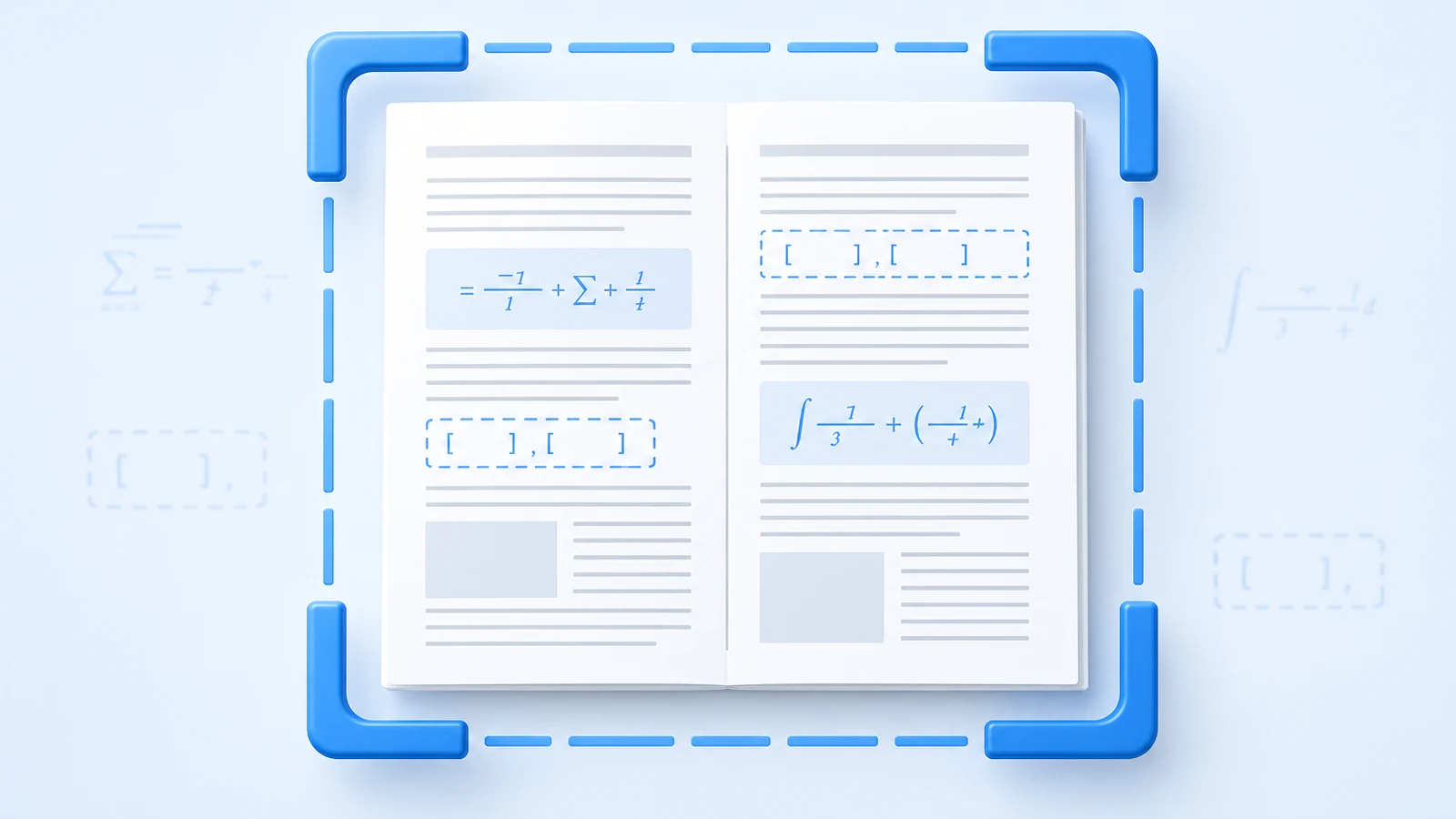
The Short Answer
To translate an academic research paper, use a PDF workflow that preserves reading order, equations, citations, tables, figures, and terminology. Do not copy text out of a two-column PDF unless you are prepared to fix reading order manually. Do not rely on AI translation alone for clinical, legal, regulatory, or publication-grade decisions without human review.
The safest workflow is:
- Confirm the PDF has selectable text.
- If it is scanned, run OCR first.
- Translate with a layout-aware PDF translator.
- Use bilingual review for the abstract, methods, results, and conclusion.
- Check equations, citations, numbers, tables, and terminology.
- Cite the original paper, not the machine-translated output.
Use PDF Translator for layout-heavy research PDFs. If your problem is general PDF formatting, read how to translate a PDF without losing formatting. If the paper is scanned, start with the scanned PDF translation guide. For tool comparison, see the best PDF translators.
Why Academic Papers Are Hard to Translate
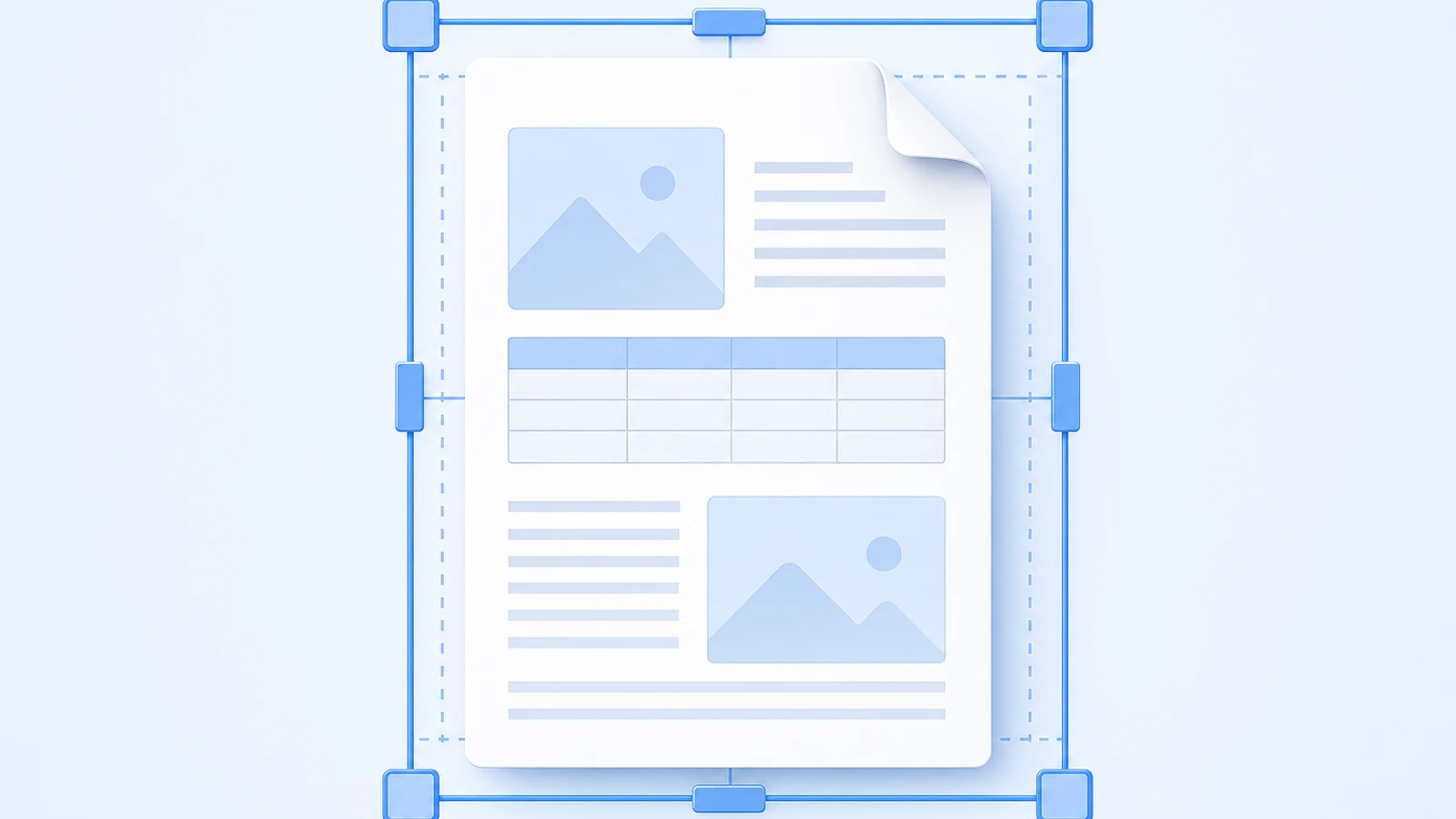
Academic PDFs are not simple text files. They combine layout, notation, metadata, and domain vocabulary.
| Element | Translation risk | What good output preserves |
|---|---|---|
| Two-column layout | Reading order can be scrambled | Left and right columns stay in logical sequence |
| Equations | Symbols can be corrupted or "translated" | Math stays unchanged |
| Citations | Markers can be moved, translated, or renumbered | Citation format and references remain intact |
| Tables | Cells can merge or shift | Rows, columns, headers, and units remain usable |
| Figures | Captions may detach from images | Captions translate while figure placement remains clear |
| Terminology | Same term can be translated multiple ways | Key terms stay consistent |
| Names and affiliations | People and institutions can be altered | Names, emails, ORCID IDs, DOIs, and identifiers remain stable |
This is why raw copy-paste often fails. It can produce a fluent translation of scrambled text.
Step 1: Identify the PDF Type
Before translating, answer one question: can you select text in the PDF?
| PDF type | How to identify it | Recommended workflow |
|---|---|---|
| Text-based PDF | You can highlight individual words | Translate directly with a layout-aware PDF workflow |
| Scanned PDF | You can only select the page as an image | Run OCR, then translate |
| Mixed PDF | Some pages are selectable, some are images | OCR the scanned pages or use a workflow that detects both |
| Exported preprint | Text is selectable but layout may be rough | Translate, then inspect columns, figures, and references |
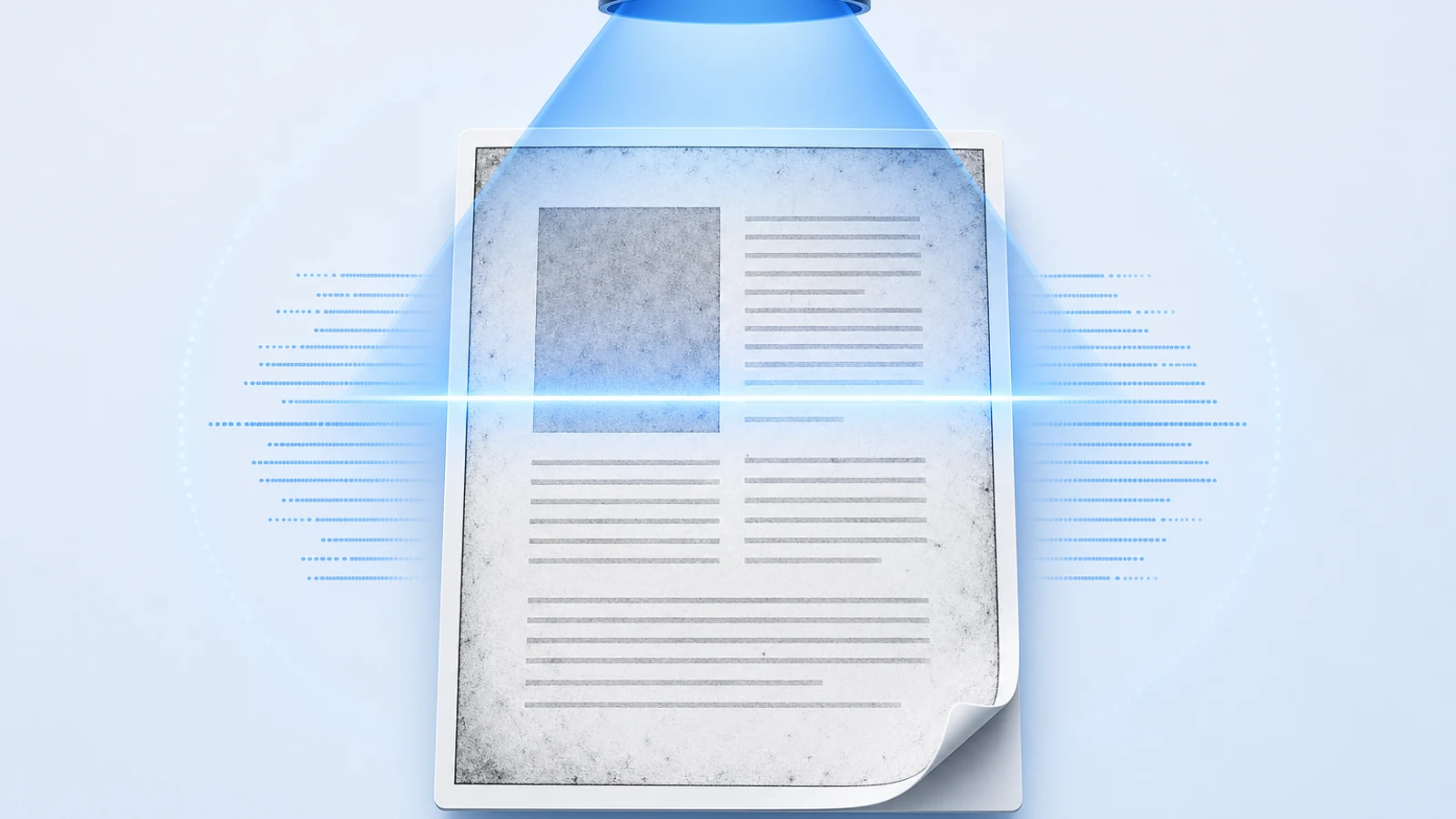
If the PDF is scanned, translation quality depends on OCR quality. Low-resolution scans, skewed pages, handwriting, stamps, and marginal notes can all damage the extracted text. Use the scanned PDF guide before judging the translation model.
Step 2: Protect Equations and Notation
Equations should usually pass through unchanged. The surrounding explanatory text should be translated, but the mathematical expression should not be rewritten.
Check:
- inline equations
- display equations
- equation numbers
- Greek symbols
- matrices and integrals
- chemical formulas
- units and constants
- references such as "Eq. (3)" or "Figure 2"
Failure examples to watch for:
alphatranslated as a word when the symbol should remain- equation numbers removed
- minus signs changed or lost
- formulas split across lines incorrectly
- references to equations no longer matching the paper
For high-stakes technical work, ask a domain expert to check equations and key claims after translation.
Step 3: Preserve Citations and References
Citations are navigation tools. They should not be creatively localized.
| Citation element | Preferred handling |
|---|---|
| In-text citation, author-year | Keep author names and year intact |
| Numbered citation | Keep bracketed or superscript number intact |
| Reference list | Usually preserve original bibliographic details |
| DOI, URL, PMID, arXiv ID | Preserve exactly |
| Journal title | Usually do not translate unless your style guide requires it |
| "et al." | Do not mangle author attribution |
If you are writing your own paper, cite the original source. If you quote from a machine translation, disclose that the translation was machine-assisted or machine-generated according to your field's norms.
Step 4: Handle Tables and Figures
Tables and figures carry much of the evidence in academic papers. They need a different review process from body text.
Table checklist:
- Are all rows and columns present?
- Did table headers translate?
- Did units stay attached to values?
- Did decimal points, commas, ranges, and confidence intervals remain correct?
- Did footnotes stay near the table?
Figure checklist:
- Did the figure caption translate?
- Did the image remain in the right place?
- Are axis labels inside the image unchanged or handled intentionally?
- Are figure references in the body still correct?
- Did multi-panel labels such as A, B, C remain visible?
Do not assume text inside an image will translate. If a chart label is embedded in the figure, it may require a separate image editing or figure recreation workflow.
Step 5: Build a Terminology Review List
For academic translation, consistency is usually more important than beautiful prose.
Before review, list:
- core concepts
- method names
- organism names
- chemical names
- disease names
- model names
- dataset names
- abbreviations
- author-defined terms
Then search the translated paper for those terms. If the same source term appears with multiple target-language translations, decide which one to keep and revise the others.
This is especially important in:
- medicine
- law
- chemistry
- machine learning
- engineering
- economics
- philosophy
- literary theory
Step 6: Translate and Review the Paper
Use this practical workflow:
- Upload the paper to PDF Translator or a comparable layout-aware workflow.
- Select the correct source and target languages.
- Download the translated PDF.
- Open the source and translation side by side.
- Review the abstract, introduction, methods, results, and conclusion.
- Spot-check every table and figure caption.
- Check equations, numbers, citations, and references.
- Build a terminology correction list if needed.
- Save the translated PDF with the original citation details.
If you need a full book, thesis, or long academic monograph rather than a paper, use Translate Book and apply the same review logic by chapter.
Academic Translation QA Checklist
Use this checklist before relying on the translated paper:
| Section | What to check |
|---|---|
| Title and abstract | Research question, method, key result, and scope |
| Introduction | Prior work and citation meaning |
| Methods | Protocols, variables, models, datasets, instruments |
| Results | Numbers, p-values, confidence intervals, tables, figures |
| Discussion | Causal claims, limitations, and hedging language |
| Conclusion | Final claims match the source |
| References | Names, years, journal titles, identifiers |
| Supplementary material | Separate files translated and reviewed if needed |
Do not skip the conclusion. A paper can have a mostly readable body and still mistranslate the final claim.
Comparison: Common Workflows
| Workflow | Strength | Weakness | Best use |
|---|---|---|---|
| Copy-paste into an LLM | Fast for a paragraph | Loses layout and context; easy to miss sections | Checking one passage |
| Browser/document translation | Convenient | May break columns, tables, and formulas | Simple single-column PDFs |
| Layout-aware PDF translator | Preserves document structure | Still needs technical review | Full research papers |
| Human academic translator | Highest confidence | Expensive and slower | Publication, legal, clinical, regulated use |
| Hybrid AI plus expert review | Good balance | Requires review process | Literature review, internal research, conference prep |
For broader PDF tool selection, compare options in best PDF translators.
Use Cases
Literature Review
AI translation is useful for screening papers in languages you do not read. Translate the abstract, conclusion, and relevant sections first. If the paper becomes central to your work, review the full translated version carefully and cite the original.
Systematic Review
Use translation to reduce language bias, but document your process. Keep the source PDF, translated PDF, translation method, and any reviewer notes. If an inclusion decision depends on a translated passage, have a bilingual reviewer check it when possible.
Conference Preparation
Translate papers from other speakers before the event. Focus review on the problem statement, method, results, and limitations so you can ask better questions.
Academic Collaboration
For research teams across languages, bilingual output is useful. It lets team members discuss a translated paper while checking original terminology where needed.
Textbooks and Course Packs
Textbooks share many academic-paper problems: equations, figures, tables, terminology, and long-form consistency. Translate by chapter, build a glossary, and use a subject reviewer for chapters students will be tested on.
Schools pairing translated course materials with classroom AI can also evaluate KidsAI for Schools, a school-focused environment for student and teacher AI workflows.
Known Failure Modes
| Failure | What it looks like | Why it matters |
|---|---|---|
| Column merge | Paragraphs from left and right columns interleave | The argument becomes unreadable |
| Formula corruption | Symbols, signs, or equation numbers change | Technical meaning can be wrong |
| Citation damage | Reference markers move or disappear | Claims cannot be traced |
| Table drift | Headers no longer match values | Data is misleading |
| Overconfident terminology | A term is fluent but wrong for the field | Readers misunderstand the method |
| Hedging loss | "May", "suggests", or "not significant" becomes too strong | Scientific claim is exaggerated |
| Untranslated figure text | Captions translate but embedded labels do not | Reader may miss the visual evidence |
| OCR error | Scanned text is misread before translation | Translation faithfully translates bad input |
Ethical and Practical Limits
AI translation is appropriate for comprehension, literature review, internal discussion, and early screening. Be more careful when the output affects publication, patient care, legal claims, regulatory decisions, engineering safety, or public policy.
Practical rules:
- Cite the original paper.
- Do not republish translated text unless you have rights to do so.
- Disclose machine translation when quoting a translated passage if your context requires it.
- Have critical claims checked by a qualified human reviewer.
- Keep the source file with the translation so readers can verify important passages.
Related Posts