Senarai Semak QA Terjemahan untuk Buku dan Dokumen Panjang
Senarai semak penerimaan praktikal untuk buku dan dokumen terjemahan lengkap, dengan keterukan kecacatan, peraturan pensampelan, semakan khusus format, dan log isu yang boleh dimuat turun.
Sebuah buku terjemahan hanya siap apabila fail sasaran lengkap, cukup tepat untuk kegunaan yang dihasratkan, boleh digunakan dari segi struktur, dan konsisten secara dalaman. Perenggan yang fasih bukan bukti yang mencukupi. Yang lebih luas rangka kerja kualiti terjemahan mentakrifkan dimensi tersebut serta keputusan untuk menerima, menyemak semula, atau menolak; senarai semak ini mengubahnya menjadi proses pemeriksaan seluruh fail.
Gunakan urutan ini:
- Bekukan sumber dan tentukan kriteria penerimaan.
- Jalankan semakan fail lengkap untuk kandungan yang hilang, diduplikasi, atau diubah susunan.
- Semak makna, nama, istilah, nombor, petikan, dan teks yang belum diterjemah.
- Uji struktur yang penting untuk format output.
- Ambil sampel kandungan sukar secara sengaja, kemudian luaskan semakan apabila kegagalan berkelompok.
- Klasifikasikan setiap kecacatan sebagai penyekat, utama, atau kosmetik.
- Semak semula pembaikan sebelum menerima fail tersebut.
Muat turun templat log isu QA terjemahan dan sesuaikan lajur penerimaannya mengikut projek anda sebelum semakan bermula.
Tentukan "cukup baik" sebelum anda memeriksa terjemahan
Terjemahan yang sama mungkin boleh diterima untuk bacaan peribadi tetapi tidak boleh diterima untuk penerbitan. Tuliskan kegunaan yang dihasratkan terlebih dahulu.
| Kegunaan yang dihasratkan | Jangkaan semakan minimum | Pencetus penolakan biasa |
|---|---|---|
| Pemahaman peribadi | Fail lengkap, makna boleh dibaca, susunan boleh digunakan | Bab yang hilang atau makna terbalik dalam petikan penting |
| Penyelidikan dalaman | Kebolehkesanan sumber, tuntutan yang tepat, nombor, petikan, dan istilah | Tuntutan, jadual, petikan, atau entiti dinamakan tidak lagi sepadan dengan sumber |
| Peredaran pelanggan atau pasukan | Istilah yang bersetuju, struktur yang stabil, log isu, pengesahan semakan | Ralat berulang atau kecacatan utama yang tidak diselesaikan |
| Pelepasan awam | Semakan editorial bahasa natif, QA pengeluaran lengkap, semakan platform | Sebarang penghalang, masalah bahasa sistematik, atau pengalaman membaca yang rosak |
| Kegunaan undang-undang, klinikal, pengawalseliaan, atau keselamatan | Semakan domain yang layak dan proses rasmi yang diperlukan | Tuntutan bahan yang tidak disahkan, arahan, amaran, dos, kewajipan, atau had |
Perbezaan ini menghalang kegagalan biasa: seorang penyemak terus menggilap tanda baca manakala tiada siapa yang mengesahkan bahawa bab terakhir wujud.
The gambaran keseluruhan ISO 5060:2024 menerangkan penilaian analitikal menggunakan jenis ralat dan mata penalti serta membincangkan persampelan secara eksplisit. Senarai semak ini menggunakan idea berguna yang sama—takrifkan kategori dan keterukan—tetapi ia adalah aliran kerja penerimaan operasi, bukan tuntutan pematuhan ISO.
Gunakan tiga tahap kecacatan yang mengubah keputusan
Label keterukan hanya berguna apabila ia memberitahu pasukan perkara yang perlu dilakukan seterusnya. Jangan kira skor hiasan yang membolehkan satu ralat besar hilang di dalam ratusan ayat yang betul.
| Keterukan | Peraturan keputusan | Contoh | Tindakan keluaran |
|---|---|---|---|
| Penghalang | Fail tidak boleh digunakan secara selamat atau bermakna untuk tugas yang dimaksudkan | Bab hilang; versi sumber salah; amaran terbalik; navigasi EPUB rosak; output tidak boleh dibaca; data peribadi terdedah | Hentikan penghantaran, betulkan punca, dan jalankan semula semakan yang terjejas |
| Utama | Pembaca boleh meneruskan, tetapi makna, ketekalan, atau struktur yang diperlukan adalah salah secara ketara | Hanyutan nama berulang; istilah teknikal tersilap terjemah; nombor tidak betul; jadual runtuh; nota kaki hilang; petikan tidak diterjemahkan | Betulkan sebelum penerimaan dan cari corak ralat yang sama di tempat lain |
| Kosmetik | Makna dan kegunaan adalah utuh, tetapi persembahan atau gaya tempatan memerlukan pembetulan | Jarak terpencil, tanda baca, baris yatim/janda, atau ketidakkonsistenan gaya bukan kritikal | Betulkan secara kelompok apabila praktikal; terima hanya jika projek membenarkannya |
Keterukan bergantung pada konteks. Pemisah perpuluhan yang berubah mungkin bersifat kosmetik dalam prop fiksyen dan penyekat dalam jadual dos. Rekodkan kedua-dua kecacatan dan sebab ia penting.
Fasa 1: sahkan bahawa sumber dan output tergolong bersama
Sebelum membaca prosa, buktikan bahawa anda sedang menyemak fail yang betul.
- Rekodkan nama fail sumber, semakan, bahasa, dan pautan checksum atau storan muktamad.
- Rekodkan bahasa sasaran, format output, tarikh terjemahan, dan tetapan alur kerja.
- Sahkan bahawa ulasan, perubahan yang dijejaki, teks tersembunyi, lampiran, and bahan belakang disertakan atau dikecualikan secara sengaja.
- Bandingkan jadual kandungan, bilangan bab, susunan seksyen, serta blok kandungan pertama dan terakhir.
- Semak bilangan halaman, slaid, lembaran kerja, petunjuk subtajuk, atau bahagian dokumen apabila format memaparkannya.
- Buka fail dalam aplikasi yang akan digunakan oleh pembaca.
Jika sumber berubah semasa terjemahan, berhenti. Mencampurkan pembetulan daripada dua versi sumber mewujudkan kecacatan yang tiada semakan bahasa boleh pulihkan dengan pasti.
Fasa 2: cari kegagalan kesempurnaan sebelum masalah gaya
Kecacatan fail lengkap adalah murah untuk dikesan dan mahal jika terlepas. Semak untuk:
- bab, perenggan, item senarai, baris jadual, kapsyen, nota kaki, nota hujung, dan lampiran yang hilang atau diduplikasi;
- teks bahasa sumber yang sepatutnya diterjemahkan;
- teks sasaran yang ditambah tanpa padanan sumber;
- tajuk yang terpisah daripada bahagian masing-masing;
- halaman atau bahagian dalam urutan yang salah;
- kandungan pembukaan atau penutupan yang terpotong; dan
- boilerplate berulang yang menggantikan kandungan sebenar.
Maklumat pakej penilaian kualiti terjemahan Suruhanjaya Eropah semasa membezakan antara salah terjemah, peninggalan, penambahan, kandungan tidak diterjemah, dan ralat terminologi. Kategori tersebut berguna kerana setiap satu mencadangkan carian yang berbeza: bandingkan sumber dan sasaran, imbas sisa bahasa sumber, dan cari istilah berulang merentas keseluruhan output.
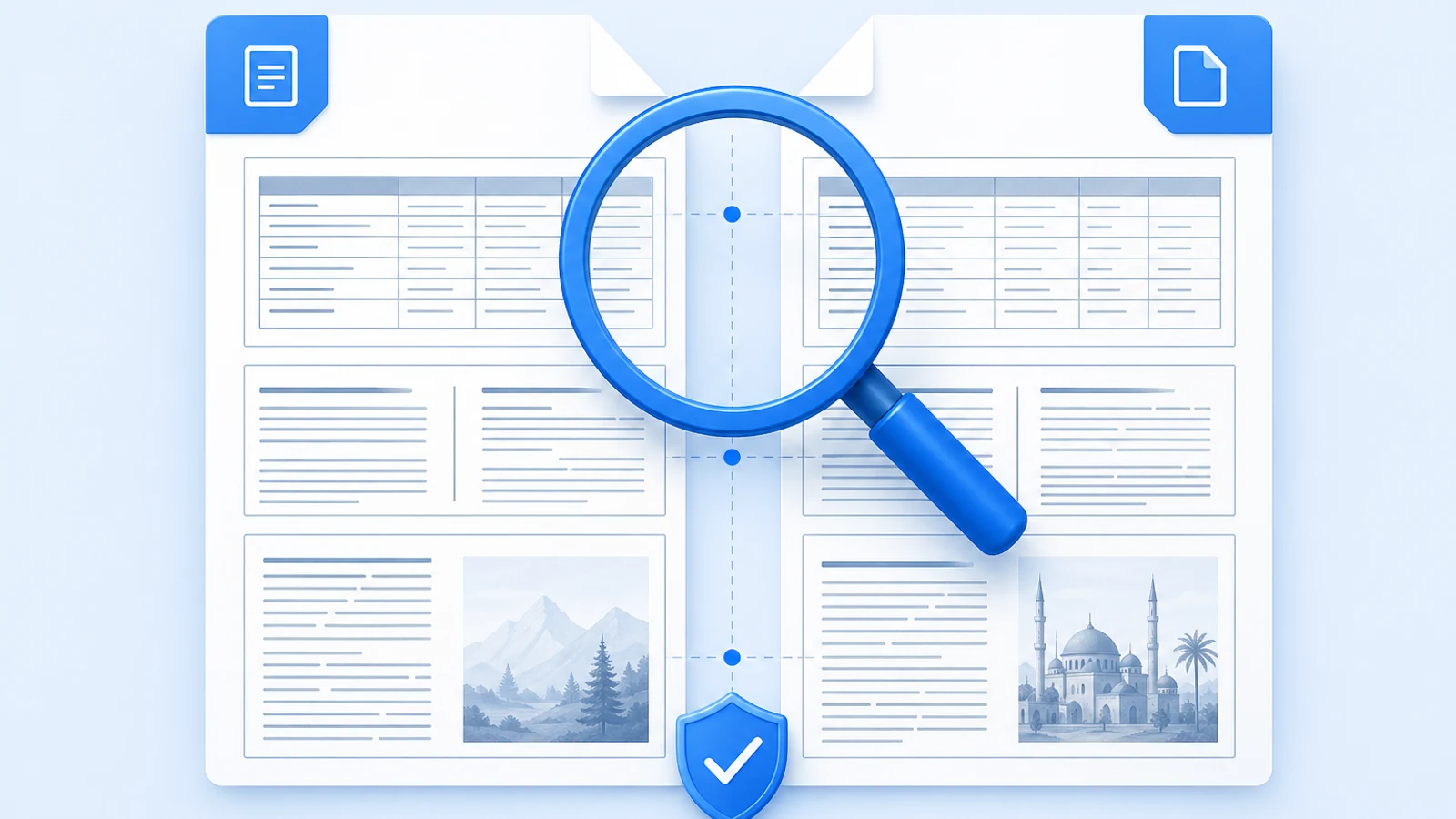
Untuk rujukan visual, sampel terjemahan sebenar menunjukkan permukaan kegagalan PDF yang konkrit termasuk urutan bacaan, jadual, skrip, nama, dan kandungan yang hilang.
Fasa 3: semak makna dan butiran terkawal
Penyemak harus membezakan enam soalan berbanding memberikan satu verdict "kelihatan baik" yang samar-samar.
Makna
Bandingkan tuntutan, perhubungan, penafian, modaliti, urutan, dan nada dengan sumber. Berikan keutamaan kepada petikan di mana perkataan kecil mengubah arahan: mesti/boleh, sebelum/selepas, meningkatkan/menurunkan, atau disertakan/dikecualikan.
Nama dan terminologi
Cari setiap watak utama, organisasi, produk, tempat, akronim, dan istilah domain. Rekodkan bentuk yang diluluskan dan setiap varian yang ditolak. Istilah yang boleh diterima secara terpencil masih boleh menjadi kecacatan besar apabila ia berubah antara bab.
Nombor dan rujukan berstruktur
Semak tarikh, perpuluhan, unit, mata wang, peratusan, julat, label rajah, rujukan jadual, nombor persamaan, petikan, URL, nombor bahagian, dan kod amaran. Jangan anggap kandungan yang tidak boleh diterjemahkan dipelihara secara automatik.
Kefasihan dan daftar kata
Baca petikan yang bersambung, bukan sahaja ayat terpencil. Periksa sama ada dialog kedengaran seperti watak yang sama, arahan mengekalkan tahap formaliti yang sama, dan tajuk menggunakan gaya editorial yang stabil.
Konvensyen tempatan
Sahkan tanda baca, tanda petikan, tarikh, unit, nama, alamat, susunan abjad, dan tingkah laku dari kanan ke kiri untuk pasaran yang disasarkan. Semakan tempat bukan langkah cari dan ganti.
Kandungan yang tidak diterjemahkan dan dilarang untuk diterjemahkan
Cari sisa bahasa sumber, tetapi bandingkan dengan senarai jangan terjemah. Nama pengarang, kod, tanda dagangan, formula, atau tajuk yang dipetik mungkin perlu kekal tidak berubah.
Fasa 4: uji output sebagai format sebenar
Permukaan penerimaan berubah mengikut jenis fail.
| Format | Semakan risiko tertinggi | Ujian peranti atau aplikasi minimum |
|---|---|---|
| Susunan bacaan, pemotongan teks, lajur, jadual, rajah, fon, pautan, teks boleh pilih | Pembaca PDF desktop ditambah satu paparan saiz mudah alih; salin petikan berbilang lajur untuk memeriksa susunan logik | |
| EPUB | Navigasi, sempadan bab, aliran semula, metadata bahasa, kulit buku, nota, imej, fon terbenam | Sekurang-kurangnya dua sistem bacaan bebas dan pelbagai saiz fon |
| DOCX | Gaya, tajuk, perubahan dijejak, ulasan, jadual, pengepala/pengaki, medan, hentian halaman | Microsoft Word atau persekitaran penyuntingan yang diperlukan, dengan keterlihatan penandaan disemak |
| SRT | Penenboman isyarat, tanda masa, penutan baris, tindanan, kelajuan membaca, pengekodan | Penyunting subtajuk ditambah main balik terhadap video sumber |
Untuk diagnosis khusus PDF, gunakan aliran kerja PDF yang mengekalkan format. Bagi risiko alat dan pakej EPUB, gunakan panduan alat terjemahan EPUB. Untuk penghantaran Word boleh edit, gunakan aliran kerja pemformatan DOCX.
Sampel risiko, bukan kemudahan
Membaca tiga halaman secara rawak adalah QA yang lemah kerana struktur yang jarang dan sukar tepat-tepat terlepas melalui pemilihan rawak. Bina sampel liputan terpaksa.
Sekurang-kurangnya, sertakan:
- Halaman tajuk, pembukaan, dan bab atau bahagian pertama.
- Bahagian penamat, kesimpulan, rujukan, dan bahan belakang.
- Setiap struktur yang berbeza: jadual, rajah, nota kaki, senarai, formula, blok dialog, blok kod, atau urutan sub-tajuk.
- Sempadan bab dan satu petikan selanjar yang panjang.
- Halaman dengan nama, istilah, nombor, dan petikan yang paling tumpat.
- Kandungan dari kanan ke kiri, bukan Latin, atau skrip bercampur jika ada.
- Sebarang kandungan yang boleh menyebabkan bahaya ketara jika salah.
Kemudian gunakan peraturan peningkatan yang mudah:
- Satu kecacatan kosmetik terpencil: rekodkannya dan teruskan sampel yang dirancang.
- Satu kecacatan utama: cari fail penuh untuk corak yang sama dan kembangkan sampel bersebelahan.
- Dua kecacatan utama jenis yang sama: anggap isu tersebut sebagai sistematik sehingga semakan yang lebih meluas menyangkalnya.
- Sebarang penyekat: hentikan penerimaan, betulkan punca, dan jalankan semula semua semakan yang boleh terjejas oleh punca tersebut.
Ini adalah peraturan keputusan, bukan jaminan statistik. Penghantaran berisiko tinggi mungkin memerlukan semakan lengkap oleh orang yang layak.
Gunakan log isu yang menjadikan pembetulan boleh diaudit
Setiap isu harus mengandungi bukti yang mencukupi untuk orang lain mereprodusirnya.
| Medan | Contoh |
|---|---|
| Lokasi | Bab 7, perenggan 12; halaman sumber 184 |
| Kategori | Terminologi |
| Keterukan | Utama |
| Sumber | "control surface" |
| Sasaran semasa | Dua terma sasaran yang berbeza merentas bab 2 dan 7 |
| Jangkaan | Bentuk glosari yang diluluskan |
| Bukti | Hasil carian menunjukkan 14 3 kemunculan |
| Pemilik | Pengulas bahasa |
| Status | Telah dibetulkan, menunggu pengesahan |
Gunakan log isu CSV yang boleh dimuat turun sebagai titik permulaan. Kekalkan satu baris bagi setiap corak kecacatan apabila pembetulan global boleh dilakukan, tetapi senaraikan setiap lokasi yang terjejas atau lampirkan output carian. Selepas perubahan dibuat, orang kedua atau semakan baharu harus mengesahkan pembetulan tersebut dalam fail akhir—bukan dalam eksport pertengahan.
Pintu masuk keluaran akhir
Terima hasil terjemahan hanya apabila semua kenyataan ini benar:
- Versi sumber dan hasil serahan sasaran adalah jelas tanpa keraguan.
- Bahagian permulaan, penutup, bab, seksyen, dan aset yang diperlukan adalah lengkap.
- Tiada halangan yang masih belum diselesaikan.
- Kecacatan besar telah dibetulkan dan corak yang sama telah dicari pada keseluruhan fail.
- Nama, terma, nombor, petikan, dan item jangan-terjemah telah lulus semakan masing-masing.
- Format output sebenar berfungsi dalam pembaca atau aplikasi yang diperlukan.
- Eksport akhir, bukan draf terdahulu, telah menerima semakan pengesahan.
- Log isu, glosari, sumber, output, and keputusan penerimaan disimpan bersama-sama.
Jika anda sedang menghasilkan draf terjemahan pertama, BookTranslator boleh memproses buku lengkap dan dokumen panjang tanpa memerlukan salin-tampal. Untuk tugasan bukan PDF yang layak, borang terjemahan semasa juga menawarkan pilihan glosari Auto untuk nama, tempat, and terma khusus yang berulang. Ini dapat mengurangkan sisihan, tetapi ia tidak menggantikan perbandingan sumber, semakan format, atau semakan manusia yang bersesuaian dengan risiko dalam senarai semak ini.
Catatan Berkaitan